
A spare room rarely stays dedicated to one purpose for very long. It may begin as a small exercise area, then become a play space on weekends, a stretching zone in the evening, or somewhere to work on hobbies. Once a room starts serving several jobs, the floor becomes surprisingly important.
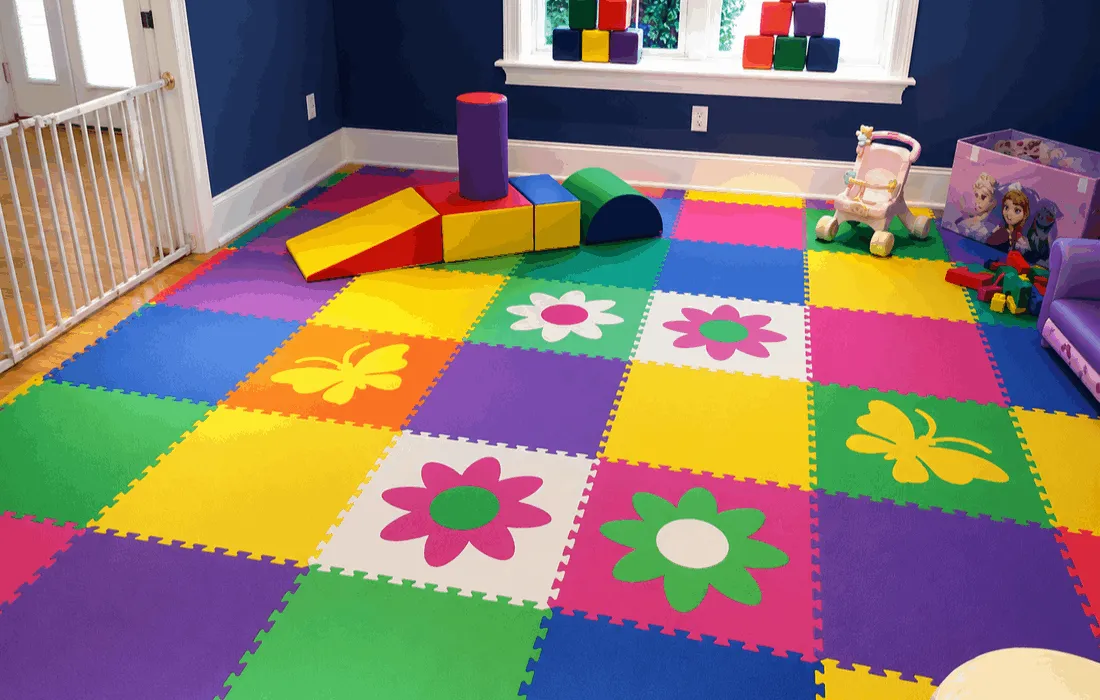
Hard surfaces are easy to clean, but they are not always comfortable for activities that involve sitting, kneeling or exercising. Permanent flooring changes can also feel unnecessary when the room may be used a year differently from now. In situations like these, a removable floor covering can offer a simpler approach.
Think About What Happens There
Before choosing anything, spend a few minutes considering how the room is actually used.
A home exercise corner might need enough space for stretching and light workouts. A family room may need an area where children can sit and play. Someone using the room for crafts may simply want a surface that is more comfortable than bare concrete or tile.
These uses can overlap, which is why flexibility matters. Instead of designing the whole room around one activity, it often makes more sense to create a section that can change with the day.
A Softer Surface Has Its Place
Hard flooring works well in many rooms, but there are times when a little cushioning makes the space more pleasant.
EVA Foam Mats can be used to create a modular surface without permanently changing the floor underneath. Individual pieces join together, allowing the covered area to be made larger or smaller according to the available space.
This can work particularly well in a room that is still evolving. If a desk, storage cabinet or piece of exercise equipment is moved, the floor layout can be adjusted rather than rebuilt from the beginning.
The ability to take sections apart also helps when the original floor needs to be reached.
Measure Around the Real Furniture
An empty room always looks bigger than it does after furniture arrives.
Before ordering flooring, mark out the space occupied by cupboards, shelves, exercise machines or other items that are unlikely to move. There may be little value in covering areas that will remain hidden underneath permanent furniture.
Doors deserve attention as well. A surface that adds height to the floor should not prevent a door from opening freely.
Taking measurements after the room is arranged, rather than relying only on the dimensions on a floor plan, usually gives a more realistic idea of how much material is needed.
Do Not Rush the Layout
Interlocking pieces may look simple to fit, but laying them out first can save unnecessary cutting.
Starting from one side of the room without checking the opposite edge can leave a very narrow final row. Moving the starting position slightly may produce a neater result.
With Foam Matting, it is also worth thinking about where the busiest areas will be. A frequently used exercise spot or play section may benefit from being positioned away from awkward edges and furniture legs.
A dry layout takes a little longer at the beginning, but it gives you a chance to change your mind before trimming anything.
Cleaning Does Not Need to Be Complicated
A multi-purpose room can collect all kinds of dirt. Shoes bring in dust, exercise leaves perspiration behind, and craft activities can create small scraps or marks.
Regular light cleaning is usually easier than waiting for the surface to become noticeably dirty. Loose debris can be removed first, followed by cleaning appropriate for the material.
Spills are best dealt with when they happen. Leaving moisture or residue trapped around joins only creates more work later.
If a section can be lifted easily, checking underneath occasionally is also sensible, especially in rooms close to entrances or areas where moisture might be carried in.
Rearranging Is Part of the Advantage
One of the useful things about a flexible room is that it does not need to look the same every month.
A workout space may eventually need more room. A play area might become smaller as children grow. Furniture may be moved around simply because the original arrangement was not working.
A modular floor can follow those changes. Pieces can be rearranged, removed or extended without committing the room permanently to its first layout.
That makes the flooring part of the room’s flexibility rather than something that limits it.
Conclusion
A practical multi-purpose room does not need an elaborate renovation. Often, the better approach is to choose surfaces and furniture that can adapt as everyday needs change.
Careful measuring, a sensible layout and straightforward maintenance can make a removable flooring area far easier to live with. For South African homeowners comparing modular foam flooring and other floor-covering options, pvcfloortile.co.za provides additional product information.