
A content series can look visually polished and still feel strangely disconnected from episode to episode. The thumbnails match, the editing style is recognizable, and the same presenter appears each week, yet the music keeps changing direction. One video uses cinematic strings, another moves into bright electronic beats, and the next relies on acoustic guitar. None of those tracks is necessarily wrong, but together they make the series sound less like one brand and more like a collection of unrelated projects.
The solution is not to find one background track and reuse it forever. It is to build a small set of musical rules that can survive different topics, moods, and episode formats. An AI Music Agent can help creators turn those rules into new musical directions using natural-language descriptions, but the important work still begins with defining what should remain recognizable across the entire series.
Start With the Series, Not the Next Episode
Most music choices are made too late. An editor finishes a rough cut, realizes the video needs background music, opens a library, and searches for something that matches the current episode. The problem is that the search is based entirely on today’s content rather than the identity of the series.
That approach works for one-off videos, but recurring content needs a wider perspective. A technology channel may cover smartphones one week and software the next, yet both videos should still feel as though they belong to the same channel. A documentary series can move between serious and hopeful subjects without abandoning its overall sound.
Before choosing new music, define the series in a few musical terms. Think about its normal level of energy, preferred instruments, production style, and whether the sound should feel modern, warm, cinematic, minimal, playful, or restrained. Those decisions become the baseline for future episodes.
Decide What Must Stay Consistent
Consistency does not mean keeping every musical element fixed. It means identifying the few characteristics that should change slowly while allowing other elements to respond to the story.
For example, a design-focused video series might consistently use instrumental music, clean electronic textures, light percussion, and relatively simple arrangements. Within those boundaries, individual episodes can still become faster, softer, darker, or more optimistic depending on the subject.
A useful way to think about this is to separate the music into three parts:
- Core sound: the instruments, textures, and broad style that define the series.
- Episode mood: the emotional direction required by the current topic.
- Scene intensity: how much energy a particular section needs.
This prevents the team from treating every new mood as a reason to completely reinvent the soundtrack.
Build Music Around Recurring Scene Types
Most recurring content also contains recurring editing situations. A typical YouTube series may have an opening hook, an explanation section, a product demonstration, a reveal, and a closing summary. A documentary series may repeatedly move between narration, interviews, transitions, and reflective moments.
Instead of searching for music by episode, create musical roles for these recurring scenes. The team might maintain several tracks for energetic openings, a few restrained pieces for narration, and a smaller group of more emotional tracks for conclusions or story-driven moments.
This creates a practical library that editors can actually use. It also makes it easier to identify gaps. If every existing track works well beneath narration but nothing fits a faster reveal sequence, the team knows exactly what type of music needs to be created next.
Write a Brief That Can Be Reused
A music brief should describe the sound of the series rather than a single topic. A prompt such as “energetic music for a smartphone review” may work once, but it becomes useless when the next episode covers cameras, laptops, or software.
A more reusable direction could be:
Modern instrumental background music with light electronic percussion, warm synth textures, moderate energy, and enough space for narration. Keep the arrangement clean and avoid aggressive drops, dominant melodies, or heavy cinematic orchestration.
That description becomes the base layer. For an opening, the editor can request more energy. For a reflective section, the percussion can be reduced. For a comparison segment, the rhythm can become slightly more pronounced while the core sound remains familiar.
This method creates variation without forcing the team to rebuild its musical identity every week.
Use Generation to Create Variations, Not Randomness
Generative music is most useful when it operates inside an existing creative direction. Without boundaries, generating more tracks can actually make the consistency problem worse because every result may move toward a different genre, instrument set, or production style.
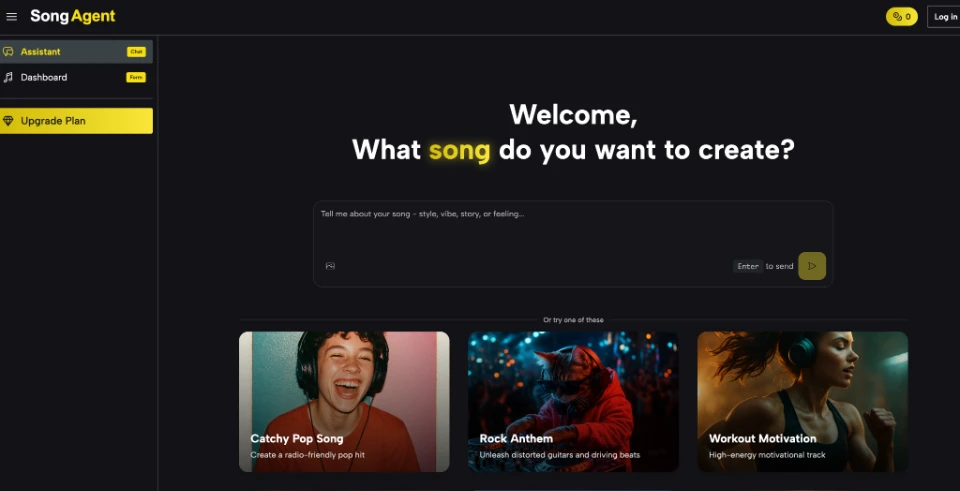
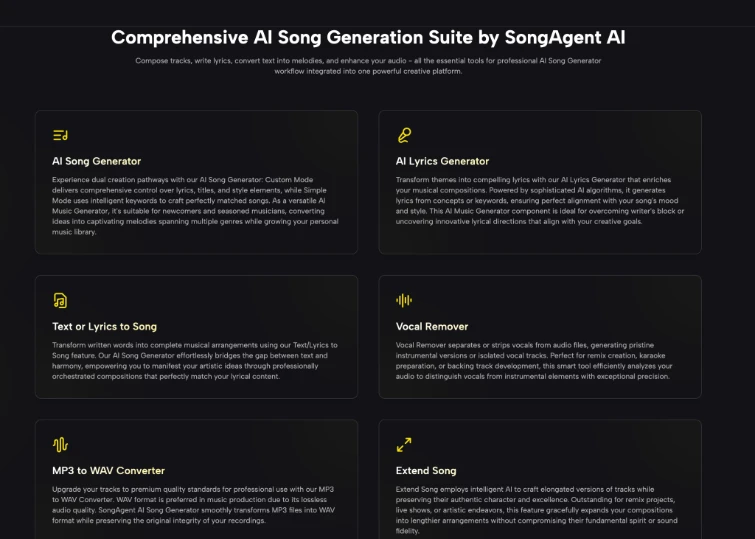
An AI Song Agent can work from written descriptions of mood, style, structure, and other musical preferences, making it useful for exploring related tracks around an established brief. SongAgent also supports workflows built around creating multiple pieces rather than treating every song as an isolated project, which is particularly relevant for recurring video or content series.
The key is to treat generation as controlled variation. New music should solve a specific need—such as creating a quieter version for narration or a higher-energy option for openings—rather than simply adding more songs to a folder.
Compare New Tracks With Existing References
Even a strong written brief can gradually drift. Small changes accumulate over time, and after several months a channel may discover that its newest music sounds noticeably different from its earlier episodes.
A simple reference folder helps prevent that. Choose four to six tracks that represent the series at its best and use them as a checkpoint whenever new music is introduced. The references should not all sound identical; together, they should demonstrate the acceptable range of the series.
When reviewing a new track, compare its instrumentation, energy, rhythm, and overall production character with those references. If the new piece sounds different, ask whether that difference is useful. A stronger emotional arrangement for a season finale may be intentional, while an unexpected genre change in a routine episode probably is not.
This makes consistency easier to judge because the team is comparing real audio rather than relying only on abstract words such as “modern” or “cinematic.”
Allow the Sound to Change When the Story Needs It
A recognizable music system should not become a cage. Special episodes, major announcements, season finales, or emotionally important stories may deserve music that stretches beyond the normal boundaries.
Those exceptions often work better when the rest of the series has already established a stable sound. Introducing heavier percussion, a larger arrangement, or an unfamiliar instrument feels significant because viewers have something familiar to compare it with.
The important distinction is whether the change has a narrative reason. If the music changes because the story needs a different emotional scale, it can strengthen the episode. If it changes only because the editor happened to find an unrelated track, it usually weakens the larger identity.
Review the Sound as the Series Evolves
A content series is rarely static. Visual branding changes, production quality improves, episode formats expand, and the audience may gradually shift. The music system should evolve with those changes rather than staying fixed forever.
Every few months, review which tracks are being used most often and which ones no longer fit. Remove weak references, create new variations around successful directions, and update the core brief when the series itself has clearly changed.
The aim is not perfect uniformity. It is controlled evolution. A strong series can sound different in its fiftieth episode than it did in its fifth while still retaining enough continuity for the audience to recognize its identity.
Make Music Part of the Brand System
Music becomes much easier to manage once it stops being treated as a last-minute asset. A small set of core sound rules, recurring track roles, reusable creative briefs, and reference music can give editors enough flexibility to support different stories without starting over every time.
For recurring content, the most useful question is not simply whether a track sounds good. It is whether the track performs the right job while still sounding as though it belongs to the series.
When creators begin evaluating music that way, consistency becomes less about repetition and more about recognition. That is what allows different episodes to have their own mood while still sounding like parts of the same creative world.